
Leading figures from the fintech ecosystem came together at the third annual Octet World Fintech Day Webinar, hosted by Octet Türkiye. Held under the theme Redesigning the Future with Fintech, the online event explored a wide range of topics shaping the present and future of financial technologies, from artificial intelligence and digital transformation to sustainability and next generation entrepreneurship.
Organized on August 1 to mark World Fintech Day and moderated by journalist Emin Çapa, the webinar featured three main sessions: The Power of Digital: From Tradition to the Future of Finance, Bringing Artificial Intelligence and Financial Intelligence Together, and Next Generation Entrepreneurship and Fintech: The Path to Creating Impact.
“Digital Transformation Is Impossible Without the Human Touch”
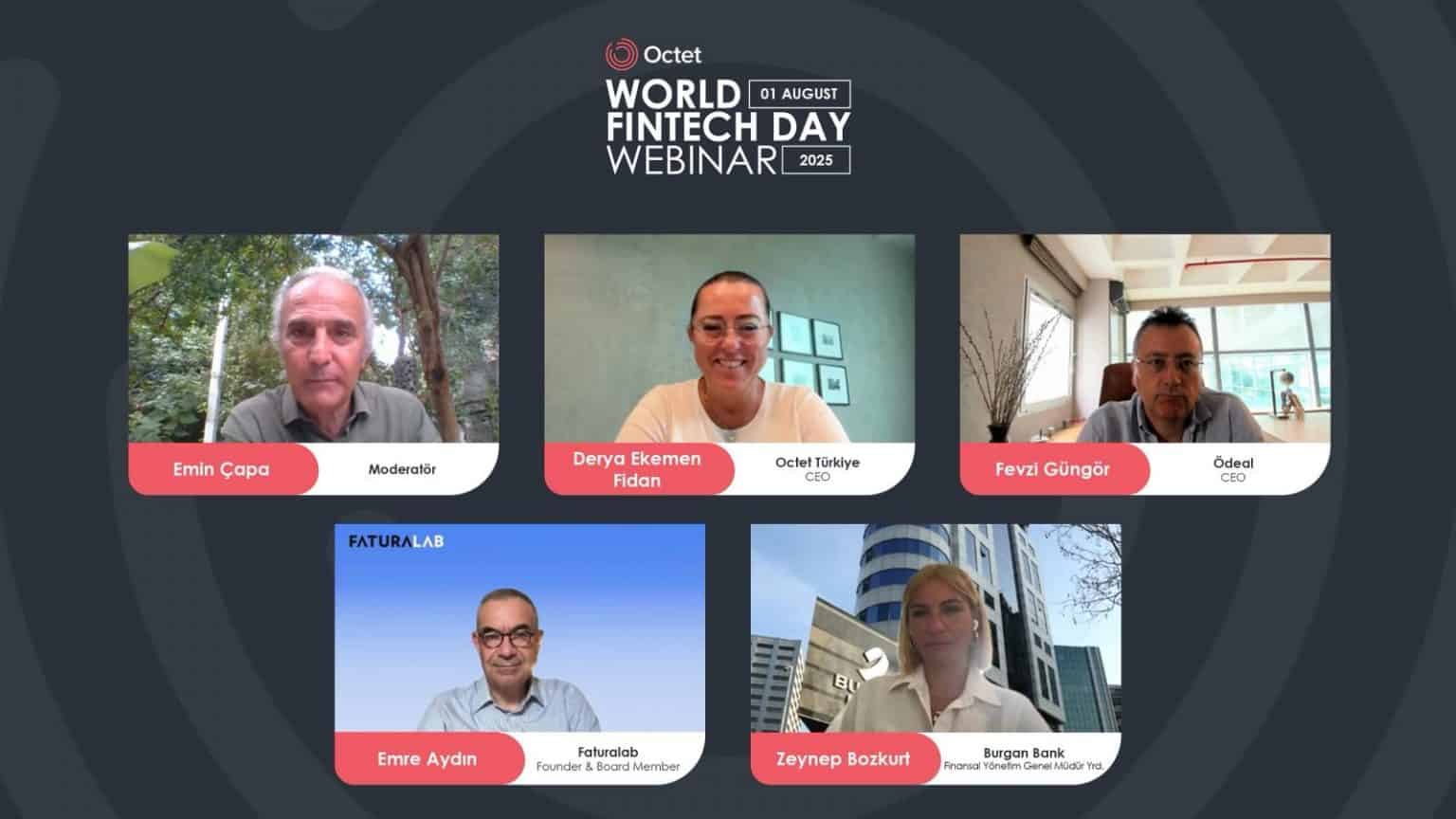
The opening session, The Power of Digital: From Tradition to the Future of Finance, featured Derya Ekemen Fidan, CEO of Octet Türkiye; Fevzi Güngör, CEO of Ödeal; Emre Aydın, Founder and Board Member of Faturalab; and Zeynep Bozkurt, Executive Vice President of Financial Management at Burgan Bank.
Emphasizing the critical role of human insight and strategic intuition in interpreting data, Derya Ekemen Fidan stated:
“Technology is not here to replace us. It exists to make us more creative, more productive, and more connected. Digitalization is building an entirely new order by transforming everything. However, digital transformation is impossible without the human touch.”
She also underlined that behind every technological innovation lies a human story.
“CFOs Are Becoming Both Data Scientists and Strategy Designers”
Fidan highlighted the evolution of the CFO role from managing money to managing data:
“In my view, CFOs are transforming into both data scientists and strategy designers. Today, they manage not only financial capital but also brand value, customer relationships, network value, data insights, reputation, and trust.”
Ödeal CEO Fevzi Güngör stressed that fintech solutions simplify complexity for individuals and institutions alike:
“The market includes many players reaching customers, but the core issue is needs. Fintechs are structures designed to address needs through different mechanisms. At the heart of it all is financial access. Through collaboration with banks, fintechs can reach millions and simplify processes.”
Emre Aydın of Faturalab emphasized the importance of financial discipline and complementary expertise within founding teams:
“Financial discipline is critical during both the establishment and investment stages of fintech companies. Founding teams must consist of individuals with complementary skill sets. Beyond expertise in finance, technology, and regulation, it is equally vital to include team members who can fill strategic gaps.”
He also highlighted the importance of collaboration within the fintech ecosystem, stating that companies should focus on their core competencies and partner with others based on customer needs.
Zeynep Bozkurt of Burgan Bank emphasized sustainable collaboration between banks and fintechs:
“The digital transformation of banks progresses faster, more flexibly, and more efficiently through partnerships with fintechs. Banks enrich their service portfolios by collaborating with fintechs that possess deep expertise and data capabilities, while also sharing knowledge in financing, regulation, compliance, and customer experience. This model of cooperation will become even stronger in the coming years, enabling more personalized and accessible financial solutions.”
Artificial Intelligence Is Shaping the Future of Fintech
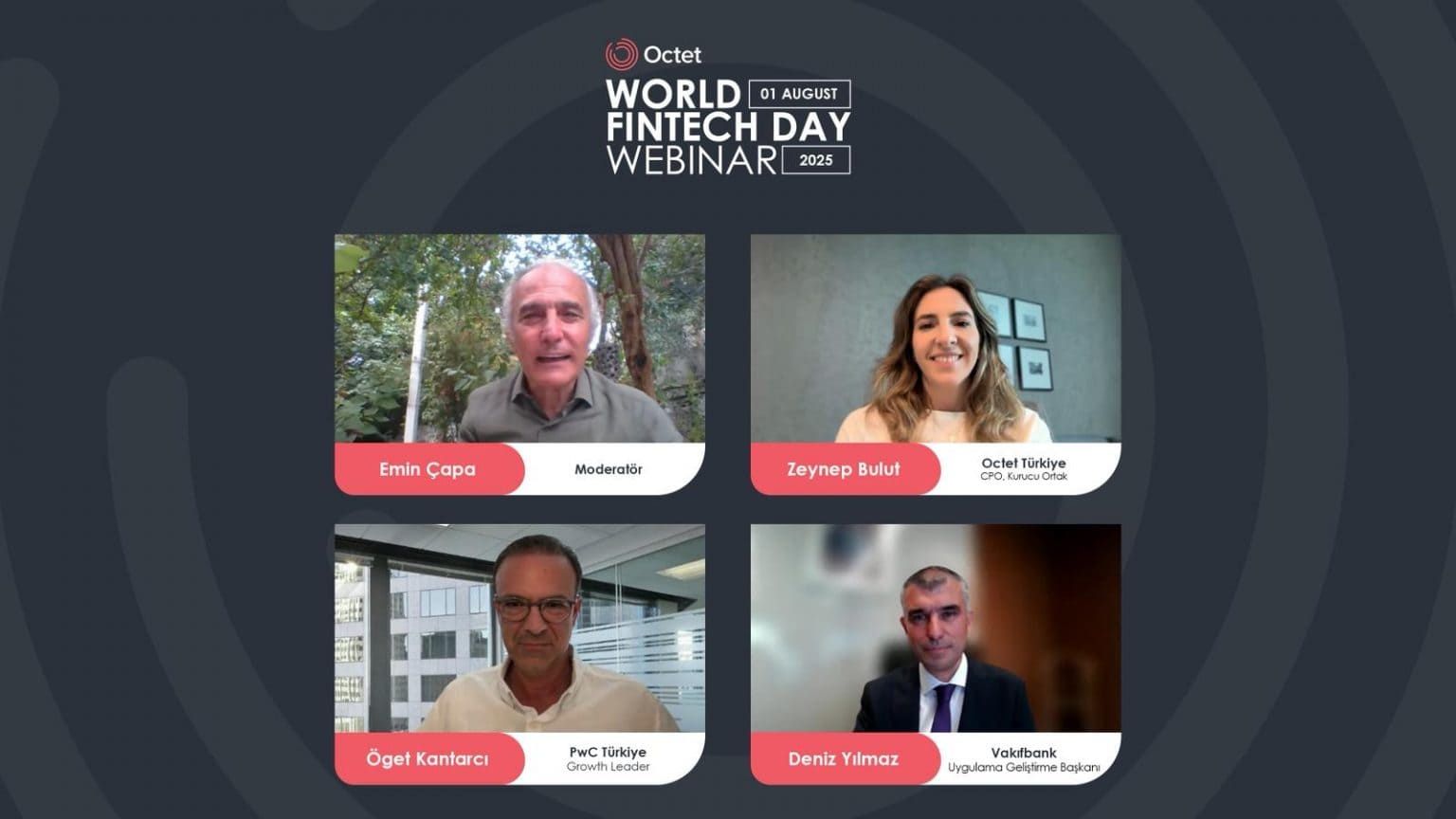
The second session, Bringing Artificial Intelligence and Financial Intelligence Together, featured Zeynep Bulut, Co Founder and Chief Product Officer of Octet Türkiye; Öget Kantarcı, Digital Transformation Leader at PwC; and Deniz Yılmaz, Head of Application Development at VakıfBank.
Zeynep Bulut stated that companies capable of effectively managing and interpreting AI gain a competitive edge:
“Artificial intelligence no longer provides only operational efficiency. It increases revenue, enhances customer experience, and makes financial strategies more dynamic. Its deep integration into payment systems is shaping the future of fintech.”
She added that global fintech leaders have fully integrated AI into their core processes:
“Global examples demonstrate how AI can evolve from an operational tool into a strategic advantage. AI should be used not merely because it is faster or more cost efficient, but because it delivers a better experience.”
Öget Kantarcı emphasized AI’s transformative impact on financial decision making:
“According to PwC’s Artificial Intelligence in Financial Services report, 70 percent of banks are actively implementing AI in their decision making processes. This shift facilitates the transition from predictive insights to automated action while significantly reducing error margins.”
Deniz Yılmaz of VakıfBank highlighted the importance of talent transformation:
“Developing talent that can work alongside AI and view it as a teammate is one of our top priorities. AI will move beyond being an assistant to becoming a true team member. With this rapid evolution, autonomous business models are expected to replace traditional digital models.”
“We Aim to Be the Best Commercial Branch of Banks”
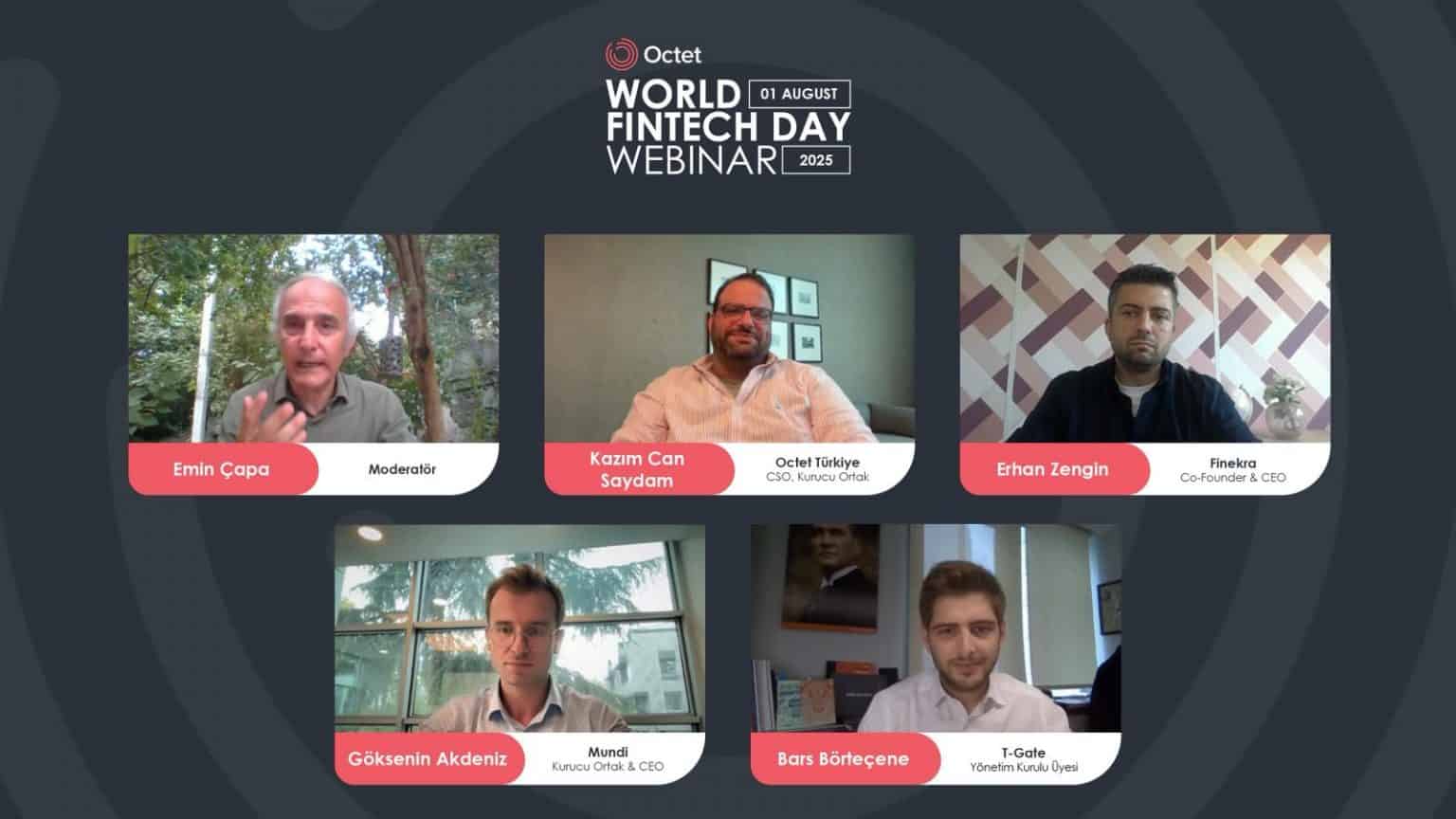
The closing session, Next Generation Entrepreneurship and Fintech: The Path to Creating Impact, featured Kazım Can Saydam, Co Founder and Chief Sales Officer of Octet Türkiye; Erhan Zengin, Founder and CEO of Finekra; Göksenin Akdeniz, Co Founder and CEO of Mundi; and Bars Börteçene, Board Member of T Gate.
Kazım Can Saydam emphasized that specialization and complementary collaboration define relationships between fintechs and traditional financial institutions:
“We strive to ensure that customers use bank products more effectively. The focus is no longer competition but shared value creation. Our goal is to become the most successful commercial branch of banks.”
He also noted that regulations, while initially perceived as barriers, can create opportunities:
“Regulations allow us to test new products and services in controlled environments.”
Erhan Zengin highlighted fintech’s role in driving operational efficiency:
“As fintechs, we focus on simplifying business processes, enabling automation, supporting digitalization, reducing errors, lowering costs, and saving time.”
Göksenin Akdeniz observed that fintechs complement banks and noted that Türkiye’s traditional banking sector offers a more advanced customer experience compared to many counterparts in the United States and Europe. He added that globally, banks are likely to remain regulated service providers, while fintechs build innovative applications on top of that foundation.
Bars Börteçene emphasized the importance of global expansion within the fintech ecosystem:
“Founded with the 125 year heritage of TurkishBank Group in Türkiye and the UK, T Gate supports innovation and global growth in fintech. As a global acceleration program, T Gate aims to help Turkish fintech and technology startups achieve strong and sustainable international success.”
He stressed that selecting the right market, engaging in strong ecosystems, active founder involvement in target markets, corporate governance from day one, and effective global PR strategies are critical success factors. Börteçene concluded by noting that while Türkiye’s fintech ecosystem has demonstrated strong domestic performance, it is now time to celebrate global success stories as well.
The third Octet World Fintech Day Webinar once again demonstrated that financial technologies are no longer confined to transactional innovation. They are actively redesigning the future of finance through collaboration, artificial intelligence, strategic transformation, and global ambition.