As part of August 1 World FinTech Day, Octet Türkiye hosted the third edition of the Octet World FinTech Day Webinar this year. Held under the theme Reimagining the Future with FinTech, the event explored a broad spectrum of topics ranging from artificial intelligence and digital transformation to sustainability and next generation entrepreneurship.
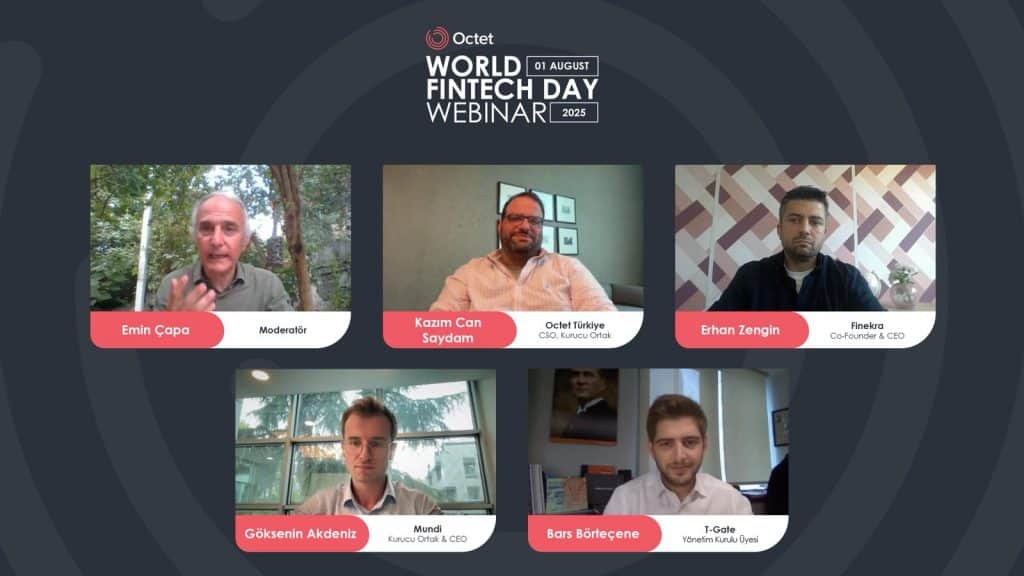
The three session online event brought together leading voices from the industry and was moderated by journalist Emin Çapa.
In this article, we take an in depth look at the key insights and discussions that shaped the Octet World FinTech Day Webinar.
What Was Discussed at the Octet World FinTech Day Webinar? Who Participated?
Organized around the central theme Reimagining the Future with FinTech, the event featured three sessions:
- The Power of Digital: From Tradition to the Future of Finance
- Bridging Artificial Intelligence and Financial Intelligence
- Next Generation Entrepreneurship and FinTech: The Path to Creating Impact
Session 1 Speakers
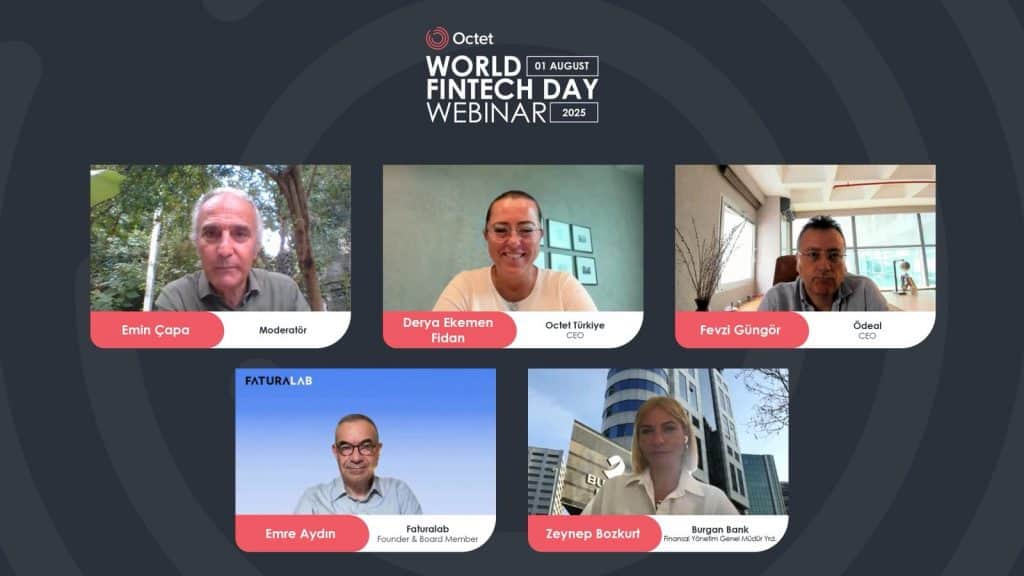
- Derya Ekemen Fidan, CEO of Octet Türkiye
- Fevzi Güngör, CEO of Ödeal
- Emre Aydın, Founder and Board Member of Faturalab
- Zeynep Bozkurt, Executive Vice President of Financial Management at Burgan Bank
Session 2 Speakers
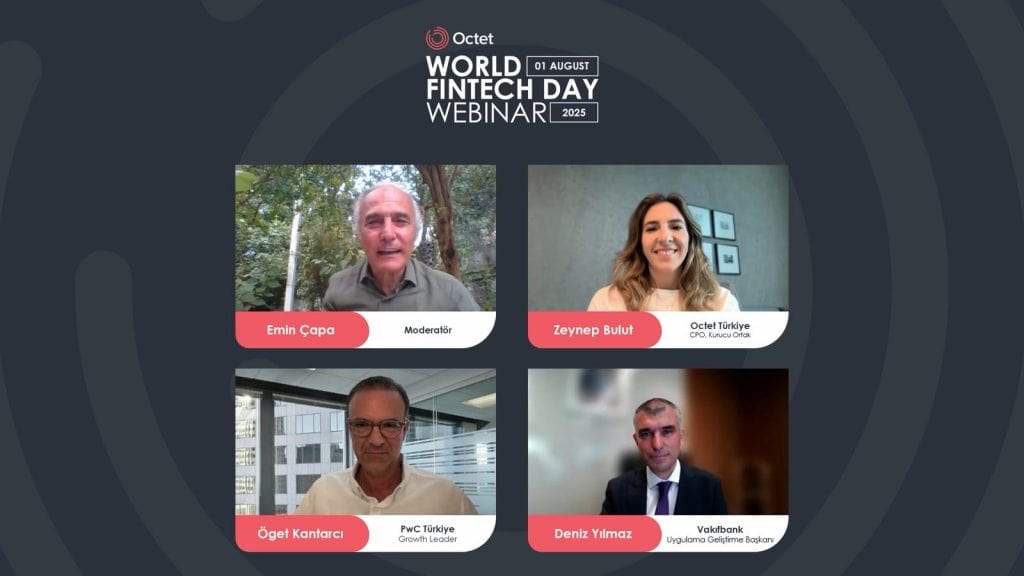
- Zeynep Bulut, CPO and Co Founder of Octet Türkiye
- Öget Kantarcı, Digital Transformation Leader at PwC
- Deniz Yılmaz, Head of Application Development at VakıfBank
Session 3 Speakers
- Kazım Can Saydam, CSO and Co Founder of Octet Türkiye
- Erhan Zengin, Founder and CEO of Finekra
- Göksenin Akdeniz, Co Founder and CEO of Mundi
- Bars Börteçene, Board Member of T-Gate
Key Highlights from the Webinar
Session 1: The Power of Digital: From Tradition to the Future of Finance
The first session examined the transformation within the fintech ecosystem and its long term implications, while comprehensively evaluating the opportunities created by financial technologies.
“Digital Transformation Is Impossible Without the Human Touch”
Derya Ekemen Fidan emphasized the critical role of human insight and strategic intuition in interpreting data. She noted that technology exists not to replace people, but to enable greater creativity, productivity, and meaningful interaction. While digitalization is reshaping systems and building a new financial order, true digital transformation cannot occur without human engagement. Behind every technological innovation, she stressed, there are human stories.
She also highlighted the evolving role of CFOs. No longer limited to managing capital, CFOs are increasingly responsible for managing data and intangible value. Brand equity, customer relationships, network value, insights, reputation, and trust are now strategic assets under financial leadership.
Fevzi Güngör underlined that fintech companies simplify complexity for both individuals and institutions. The core issue, he stated, is financial access. Through collaboration with banks, fintech firms are expanding inclusion and streamlining processes for millions of users.
Emre Aydın pointed out that sustainable fintech growth depends on financial discipline from the early stages. Founding teams must combine expertise in finance, technology, and regulation while ensuring complementary skill sets. He also emphasized that collaboration across the ecosystem is essential, with each player focusing on its core strength to meet customer expectations effectively.
“Banks and FinTechs Are Building a Sustainable Collaboration Model”
Zeynep Bozkurt highlighted the growing importance of collaboration between banks and fintech companies. She explained that fintech partnerships enable banks to move faster and operate more flexibly. By collaborating with specialized fintech firms, banks enhance their service offerings, while fintech companies benefit from banking expertise in funding, compliance, and customer experience. This collaboration model is expected to deliver increasingly personalized, accessible, and effective financial solutions in the coming years.
Session 2: Bridging Artificial Intelligence and Financial Intelligence
This session explored AI driven product development and the transformation of financial decision making processes.
“Artificial Intelligence Is Shaping the Future of FinTech”
Zeynep Bulut stated that companies capable of effectively managing and interpreting AI gain a strong competitive advantage. AI is no longer limited to operational efficiency. It increases revenues, enhances customer experience, and enables more dynamic financial strategies. In payment systems especially, deep AI integration is redefining the future of fintech. She emphasized that global fintech leaders are transforming AI into a strategic asset, not merely a cost saving tool.
Öget Kantarcı referenced PwC research indicating that 70 percent of banks are actively implementing AI in decision making processes. This shift facilitates the transition from predictive analytics to automated action while significantly reducing error rates.
Deniz Yılmaz emphasized the importance of talent transformation. Organizations must develop professionals who can collaborate with AI systems as teammates. In the near future, AI will evolve from assistant to active collaborator, paving the way for autonomous business models.
Session 3: Next Generation Entrepreneurship and FinTech: The Path to Creating Impact
The closing session focused on emerging entrepreneurial dynamics, fintech opportunities, and strategic approaches to creating impact.
“We Aim to Become the Best Commercial Branch of Banks”
Kazım Can Saydam highlighted that collaboration based on specialization and complementarity defines the relationship between fintech firms and traditional financial institutions. Rather than competing, fintech companies should focus on enabling customers to use banking products more effectively. He noted that regulation, often perceived as a barrier, can serve as a controlled environment for testing innovation.
Erhan Zengin emphasized fintech’s ability to simplify business processes, enhance automation, reduce errors, lower costs, and create operational efficiency for companies.
Göksenin Akdeniz stated that fintech firms complement banks, particularly in markets like Türkiye where traditional banking already offers advanced customer experience. Globally, he anticipates a model where banks remain regulatory anchored service providers while fintech companies develop innovative applications on top of that foundation.
Bars Börteçene emphasized the importance of global expansion within the fintech ecosystem. Through T Gate, established by TurkishBank Group, the aim is to support innovation and accelerate international growth for fintech startups. He underlined that successful globalization requires selecting the right market, participating in strong ecosystems, active founder involvement, strong governance from day one, and effective public relations strategies. Türkiye’s fintech ecosystem, he concluded, is ready not only to dominate the domestic market but also to celebrate global success stories.
Missed the Octet World FinTech Day Webinar?
The Octet World FinTech Day Webinar was broadcast live on YouTube on August 1, 2025. You can watch the full recording through the official Octet Türkiye YouTube channel.